THE LAW
Every town had to have them
After the Black Death, the Statute of Labourers of 1351 made every township provide stocks. Anyone offering or demanding high wages could be set in them for up to 3 days.
Check the sentences doodlestocks
A HISTORY OF THE VILLAGE STOCKS
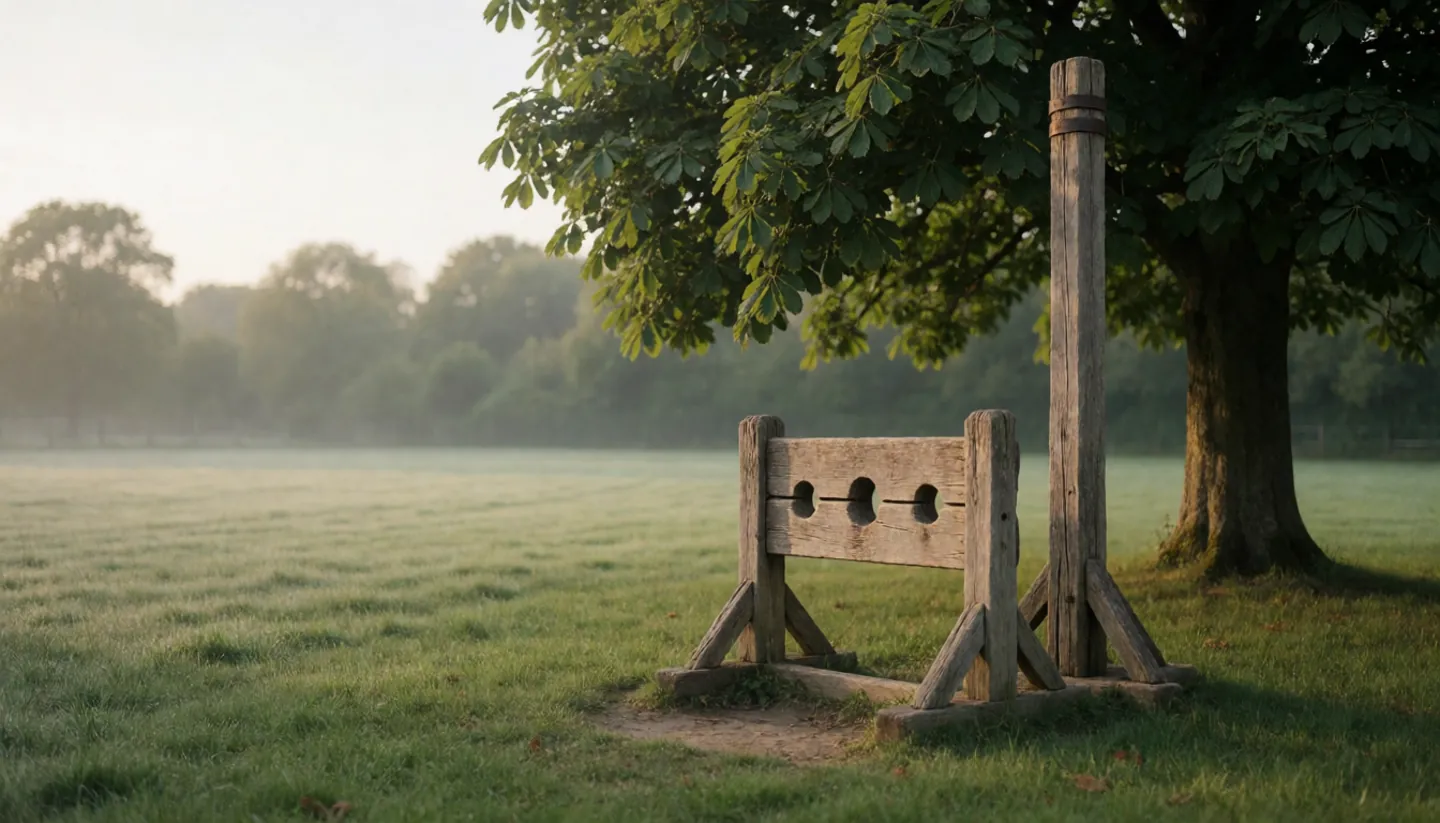
On many English village greens stands an odd wooden bench with holes for ankles.
For centuries, stocks were how villages punished small offences in public. This independent history guide explains the laws behind them, who ended up sitting in them and why so few survive. It is about wooden stocks, not the financial kind.
1351 every town a set
Check the sentencesTHE SHORT ANSWER
Stocks hold the feet; a pillory holds the neck and arms.
Both relied on public shame.
THE LAW
After the Black Death, the Statute of Labourers of 1351 made every township provide stocks. Anyone offering or demanding high wages could be set in them for up to 3 days.
Check the sentencesTHE DEVICE
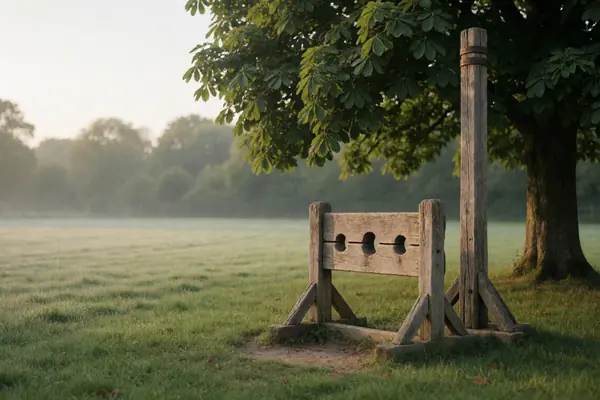
Stocks are hinged wooden boards that close around the ankles, sometimes the wrists too, holding the offender seated. Passers-by could jeer, throw rubbish or tickle their feet.
How they endedTODAY
Hungerford's 17th-century timber stocks, with four holes and a whipping post, have been Grade II listed since 1962.
Spotting a set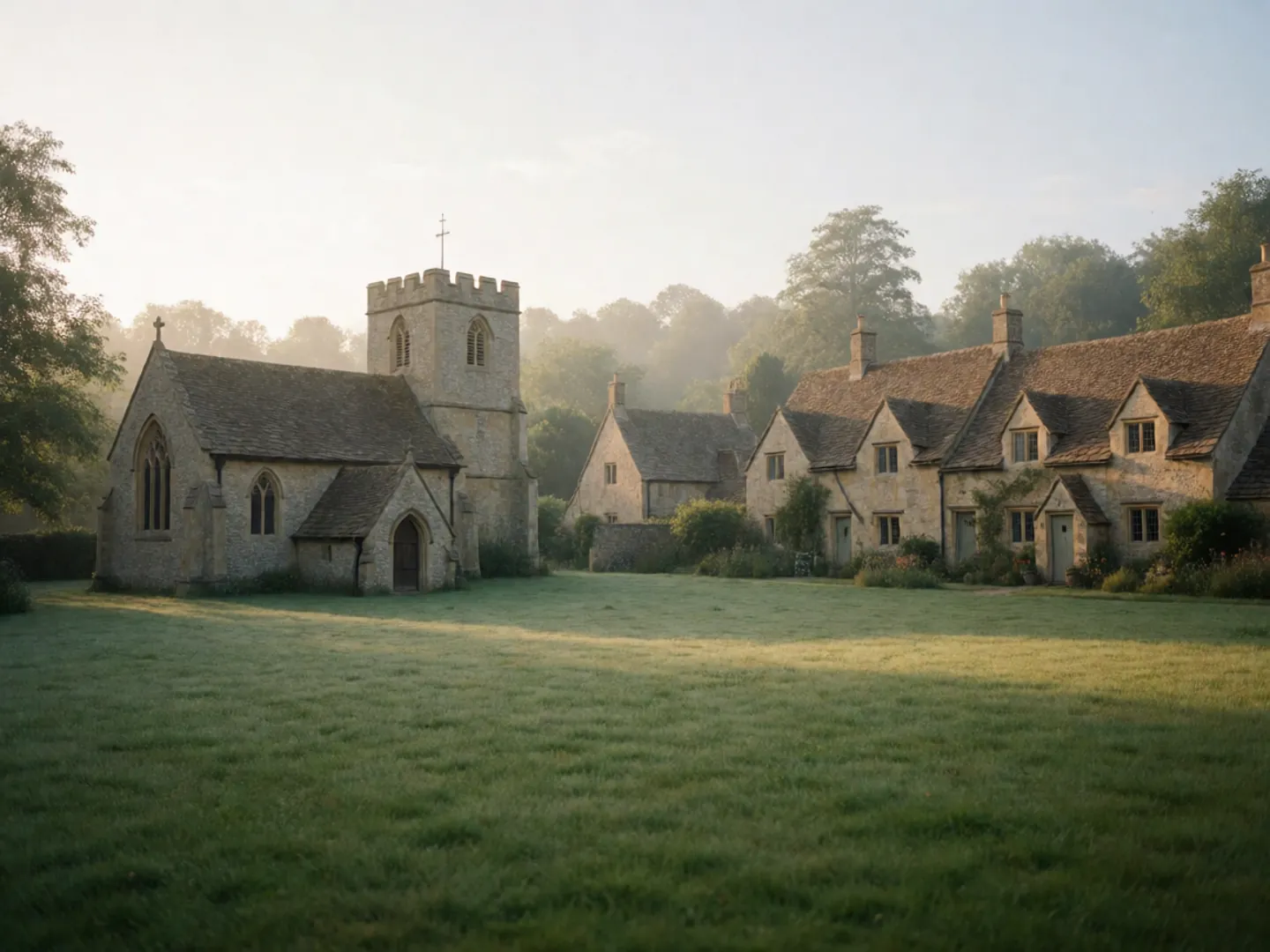
FOUR THINGS TO LOOK FOR
Next time you pass a set on a green or in a churchyard, these details tell you more about it.
Sets vary. Hungerford's 17th-century timber stocks, for example, have four holes and a whipping post.
Whipping posts became a common part of stocks during the rising vagrancy of the late 1500s; whipping was the usual punishment for petty theft.
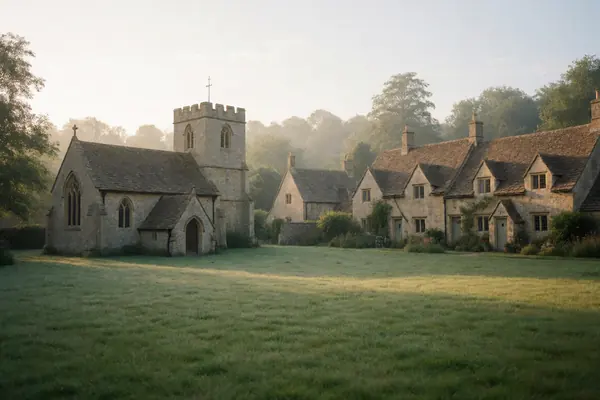
Stocks were often near the church or at a central spot. Meldreth's stand on a small green near the former home of a local family who may have held judicial powers.
Many surviving stocks are protected as listed buildings, and some have been heavily restored in the 19th and 20th centuries.
TWO NUMBERS WORTH KNOWING
Wooden stocks rot, and many were destroyed.
Those left are often restored or replicas.
11,000+
Estimated sets of stocks by the 1700s
A statute of 1405 added a duty for every manor to provide stocks, on top of the 1351 duty on every township.
NORFOLK MUSEUM SERVICE
≤ 400
Sets left in an early 1900s survey
Some authorities preserved their stocks or made replicas; others destroyed them as reminders of a brutal past at a time when Victorians wanted to seem civilised.
NORFOLK MUSEUM SERVICE
Both figures are estimates quoted by the Norfolk Museum Service, not exact counts.
A QUICK SENTENCE CHECK
Pick an offence to see the time in the stocks set by old English statutes, as summarised by the Norfolk Museum Service. The bar shows how long.
In practice, authorities often preferred fines, which were used to fund poor relief.

HOW THEY ENDED
Stocks were in use in England by the Saxon period and appear in the Utrecht Psalter of about 820 AD. The 1351 Statute of Labourers was not fully repealed until 1863, so in theory stocks could be used until then. Most had fallen out of use by 1850.
The last recorded use in the UK was at Newbury, Berkshire, on 11 June 1872. In Meldreth, Cambridgeshire, the stocks are thought to have last been used in 1860, for brawling in church. Sources note that stocks have never been formally abolished.
Questions
Stocks hold the ankles, and sometimes the wrists, with the person seated. A pillory has boards on a post around the neck and arms, so the person has to stand.
The Statute of Labourers of 1351 required every township to provide a set, as a response to the labour shortage after the Black Death. A 1405 statute required every manor to have them too.
The last recorded use in the UK was at Newbury, Berkshire, on 11 June 1872. Most had fallen out of use by 1850.
A survey in the early 1900s found no more than 400 sets, compared with an estimated 11,000 or more by the 1700s.
No. It is an independent history guide to wooden village stocks. It gives no financial, investment or legal advice.
Updated
ABOUT THIS NAME
doodlestocks.com is part of the DoodleSale portfolio. It isn't in an auction right now, but you can ask about leasing it.